
Lavender Ruffled Rose
Out of everything I have made so far, this rose might be the one that surprised me the most. It starts as nothing more than a long, wavy strip of stitches, and it is not until you actually roll it up that it turns into something that genuinely looks like a bloom. There is a small bit of magic in that moment, watching a flat piece of crochet fold itself into layered petals.
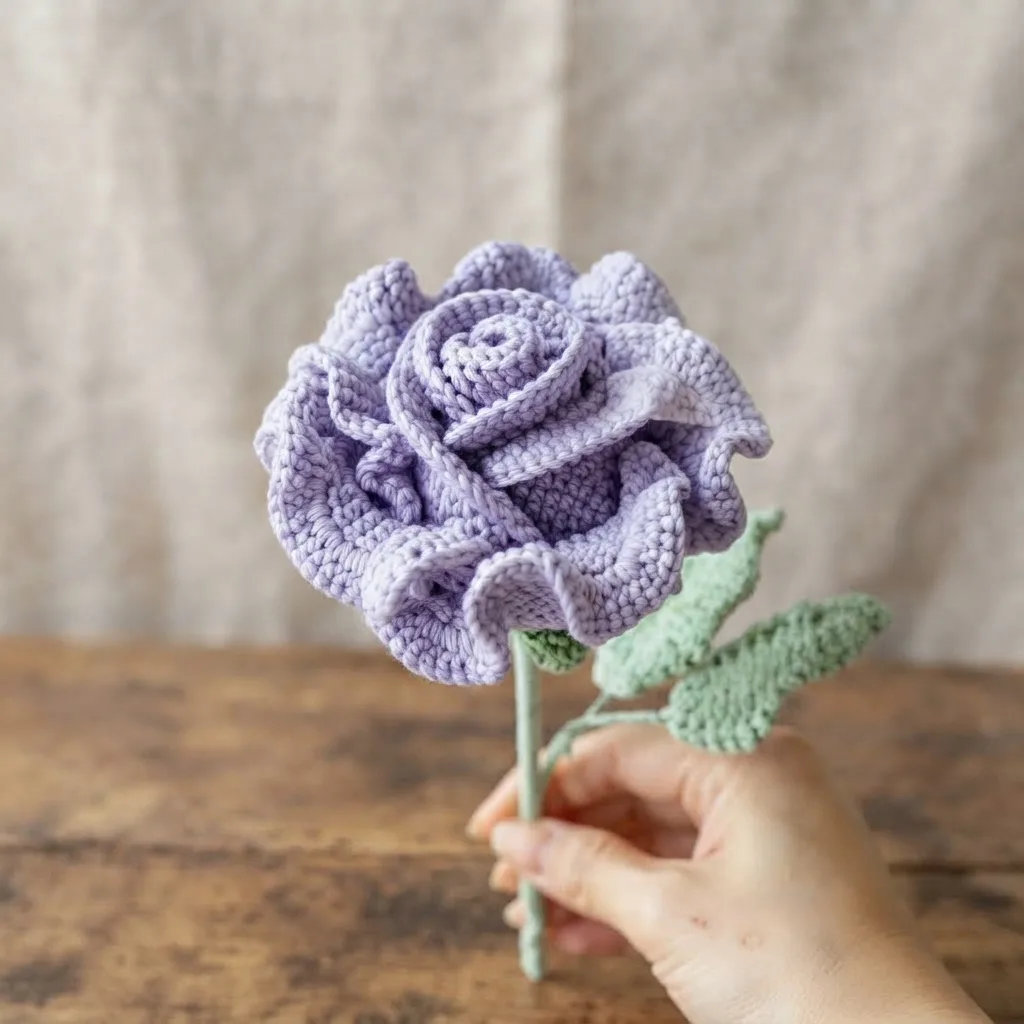
This one sits at an intermediate level, mostly because of the petal strip itself. The stitch pattern shifts height several times across each repeat, moving from short stitches up to tall ones and back down again, which is what gives the top edge its wavy, ruffled look. It is not difficult exactly, it just asks you to stay focused on your stitch counts as you go, since one missed stitch can throw off the rhythm of the scallops.
Once the strip is done, the rest of the process is fairly relaxed. You roll it into a bud, add a base to cover the raw edges, attach a couple of leaves, and mount the whole thing on a wrapped wire stem. Plan for somewhere around 2 to 3 hours total, and know that the rolling step goes a little faster once you get a feel for how tightly to wind the center versus how loosely to let the outer petals fan out.
Quick Pattern Details
| Detail | Value |
| Skill Level | Intermediate |
| Finished Size | Approx. 3 in (7.5 cm) bloom diameter, 10 in (25 cm) total stem length |
| Time to Complete | 2 to 3 hours |
| Construction | Petal strip worked flat, then rolled into a bloom and mounted on a stem |
| Pieces Made Separately | Petal strip, sepals, leaves, stem |
| Special Technique | Rolling a flat scalloped strip into a layered rose shape |
| Colors Needed | Lavender or purple, and sage green |
Materials Needed
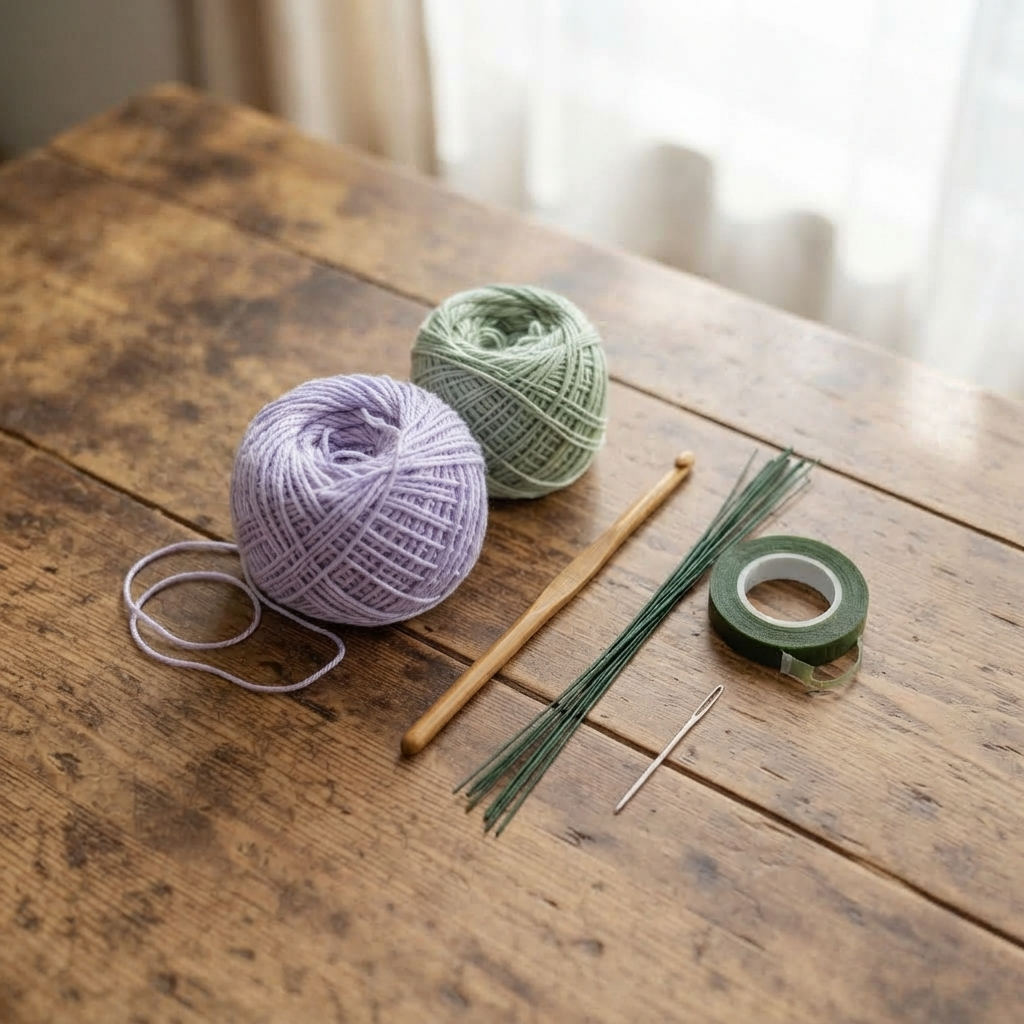
- Light weight (fine/sport, weight 2 to 3) cotton yarn in lavender or purple — approx. 15 to 20g, used for the rose petal strip
- Light weight yarn in sage green — approx. 10 to 15g, used for the stem wrap, sepals, and leaves
- Crochet hook, size 2.5mm (US C/2)
- One length of floral wire or thick stem wire, 10 to 12 in (25 to 30 cm)
- Floral tape, or extra green yarn for wrapping the stem
- Small amount of stuffing or scrap yarn, for the petal roll core
- Yarn needle
Stitches & Abbreviations Used
- ch – Chain
- sc – Single Crochet
- hdc – Half Double Crochet
- dc – Double Crochet
- tr – Treble Crochet
- sl st – Slip Stitch
- st(s) – Stitch(es)
- FO – Fasten Off
- ( ) – Stitch count at end of row
Instructions
Piece 1: Rose Petal Strip (make 1, lavender)
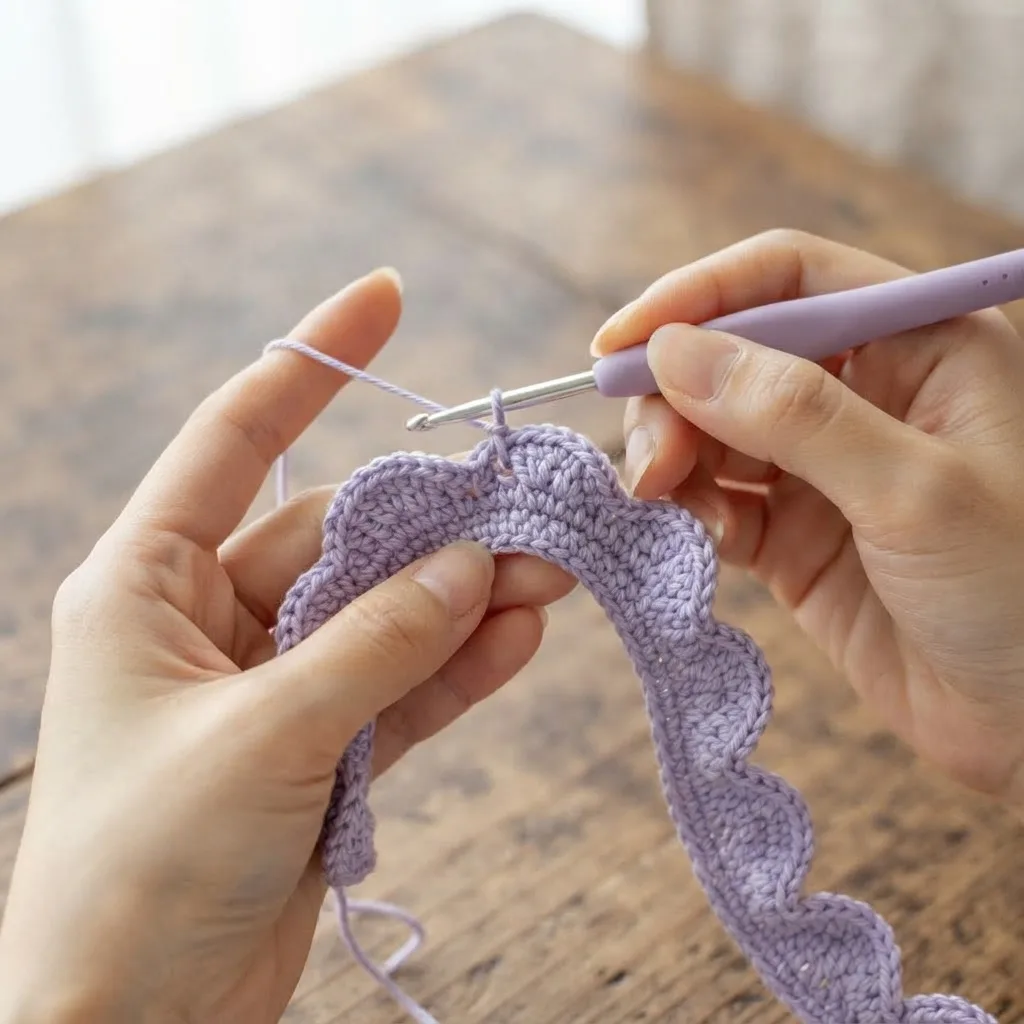
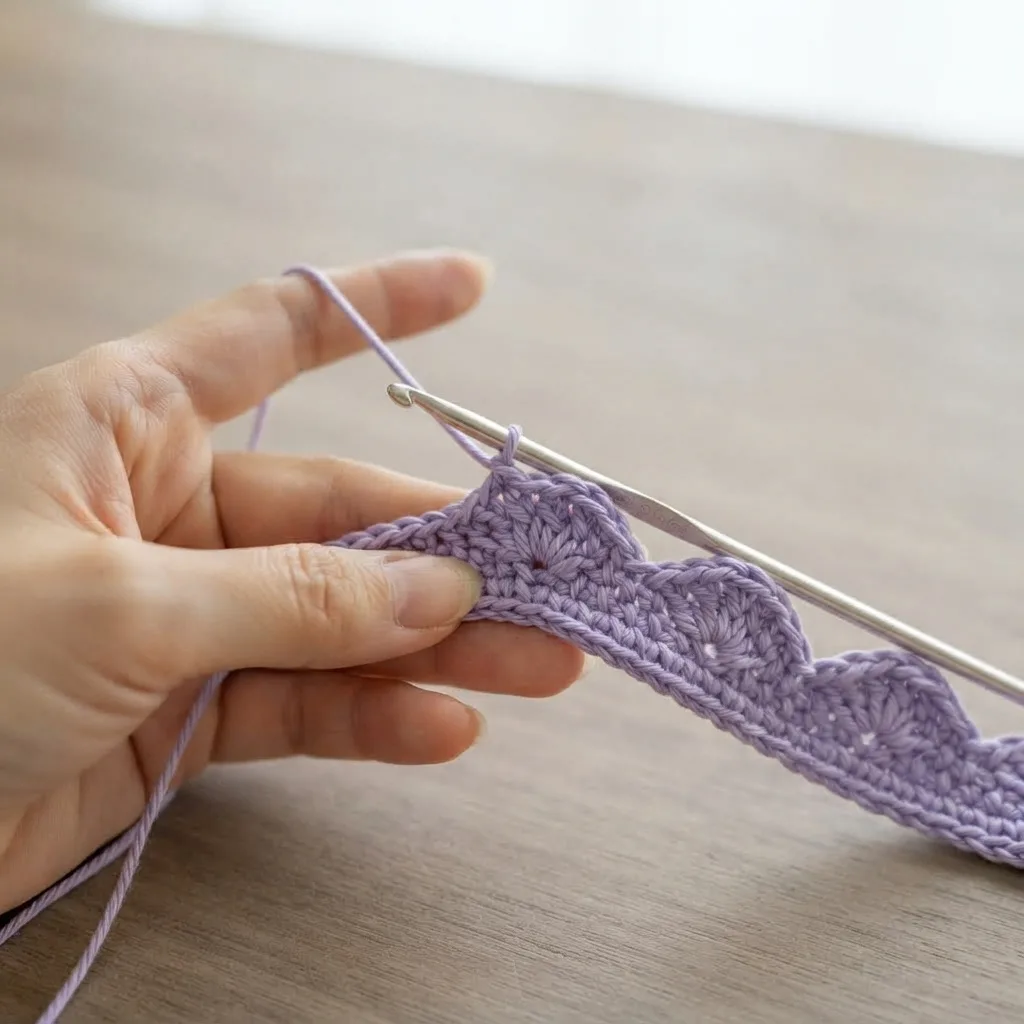
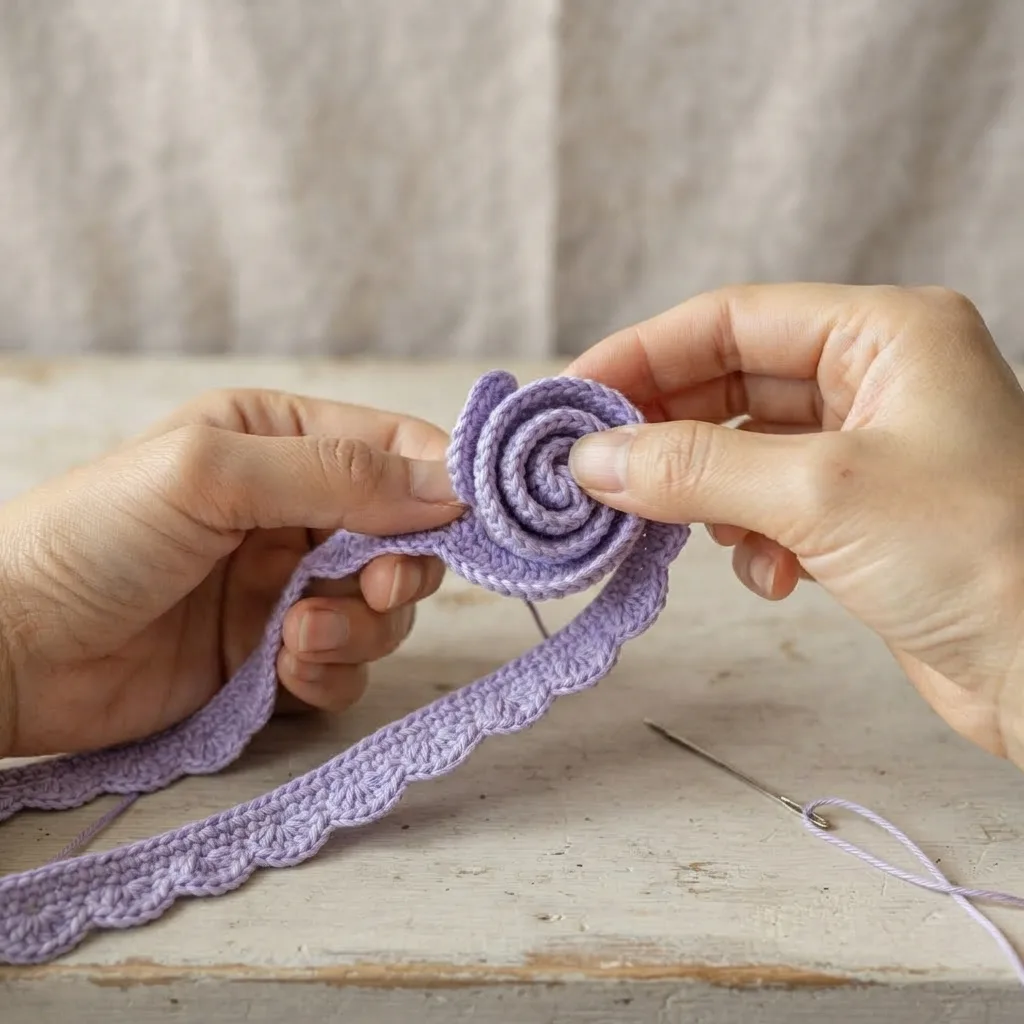
Worked flat as a long strip with a scalloped, wavy top edge, then rolled to form the bloom.
- Chain 41. This is a good length for a medium sized rose, a longer chain will give you a bigger, fuller bloom if you want to scale it up.
- Row 1, building the wave along the strip: working across the chain, repeat the following sequence 5 times, sc 1, hdc 1, dc 2, tr 2, dc 2, hdc 1, sc 1, sl st 1. This creates 5 scalloped petal bumps along the strip. If you used a longer or shorter chain, adjust how many times you repeat the sequence to match.
- FO, leaving a long tail at the starting end for rolling and sewing.
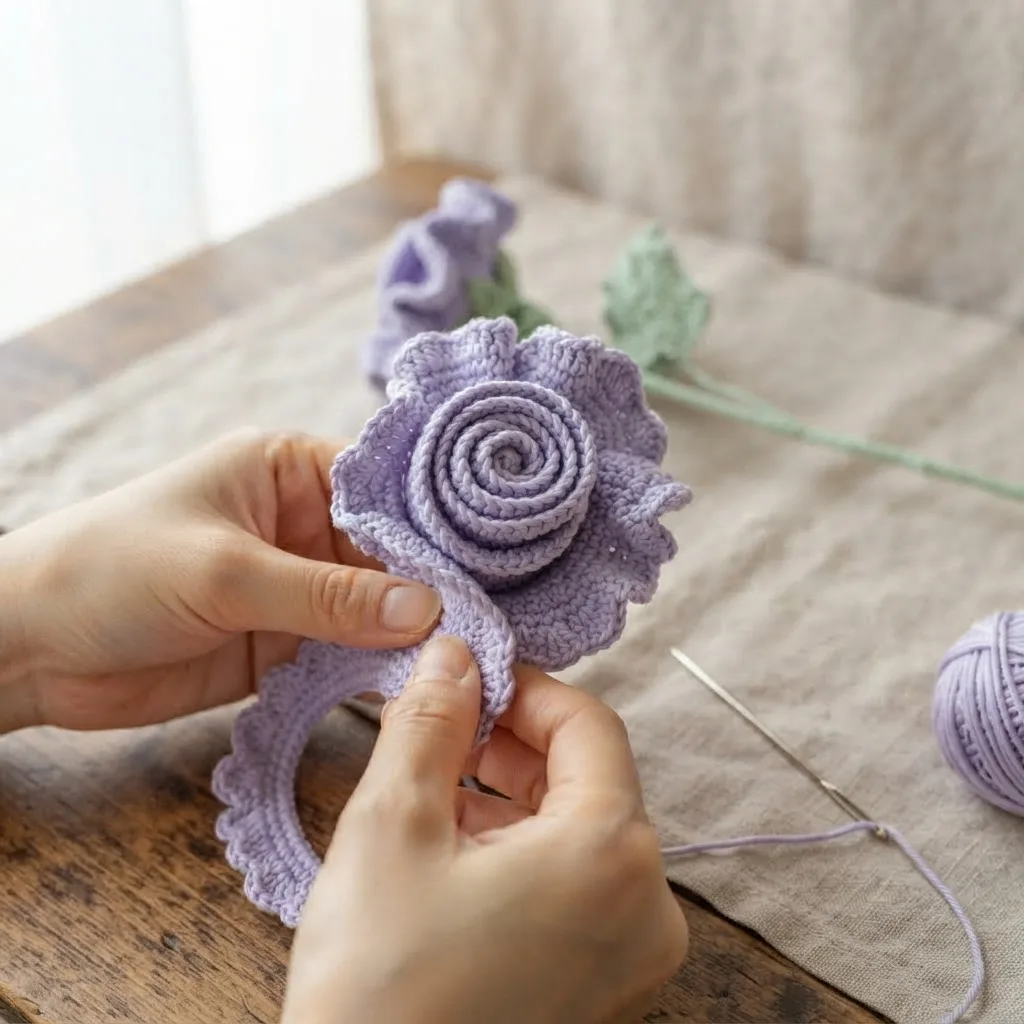
Rolling the rose: Starting at the tighter, straighter end of the strip, tightly roll the strip around itself 2 to 3 times to form the center bud, then continue rolling more loosely, letting the scalloped edge fan outward, to build the outer petal layers. As you roll, stitch through the base of the strip with the long tail every half turn or so, to secure the layers together and keep the spiral from unrolling on you. Fasten off securely at the base once fully rolled, leaving a tail for attaching to the stem.
Piece 2: Sepals / Base (make 1, green)
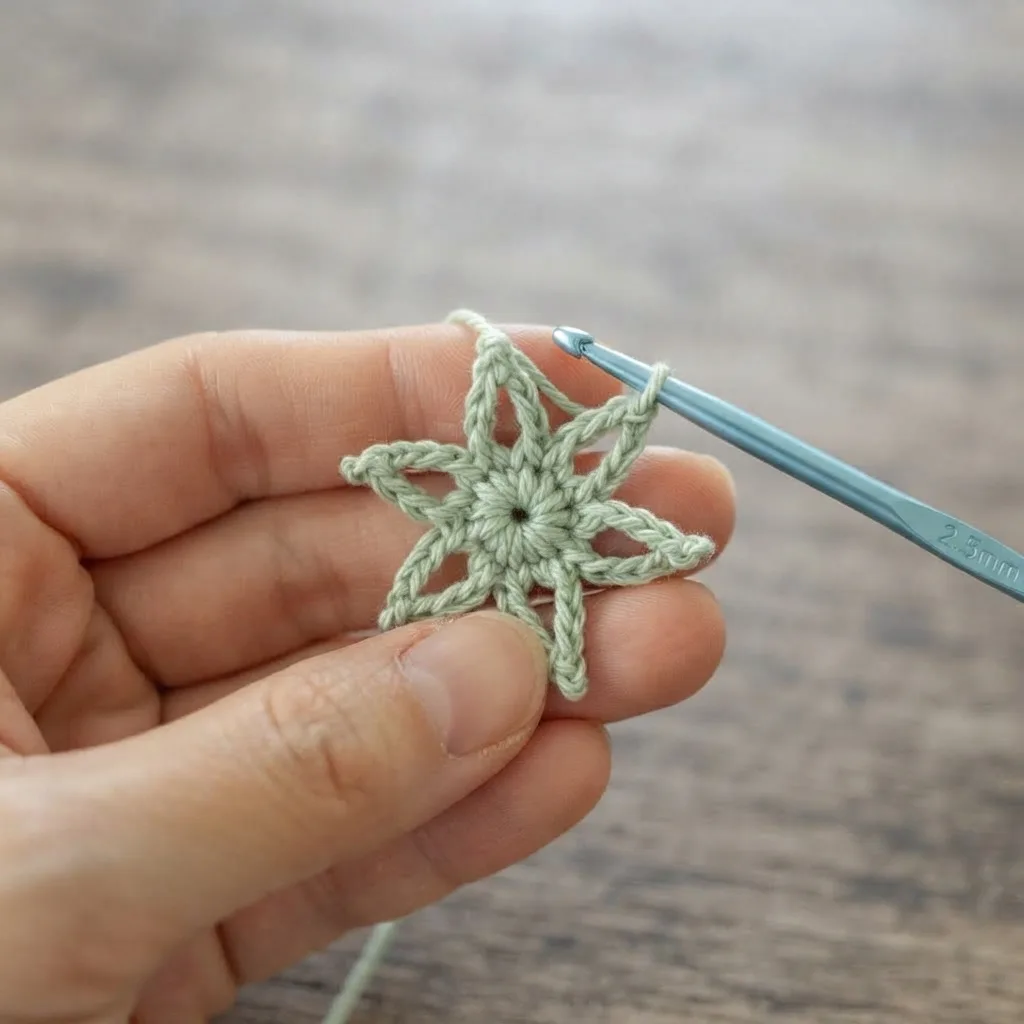
- Rnd 1: 6 sc in MR (6)
- Rnd 2: (ch 4, sl st back down the chain, sl st into next st) x6 around, forming 6 small pointed sepals radiating out from the center (6 points)
- FO, leaving a long tail. Sew or thread this piece up over the base of the rolled rose so the sepals sit just beneath the petals, covering the raw base.
Piece 3: Leaves (make 2 to 3, green)
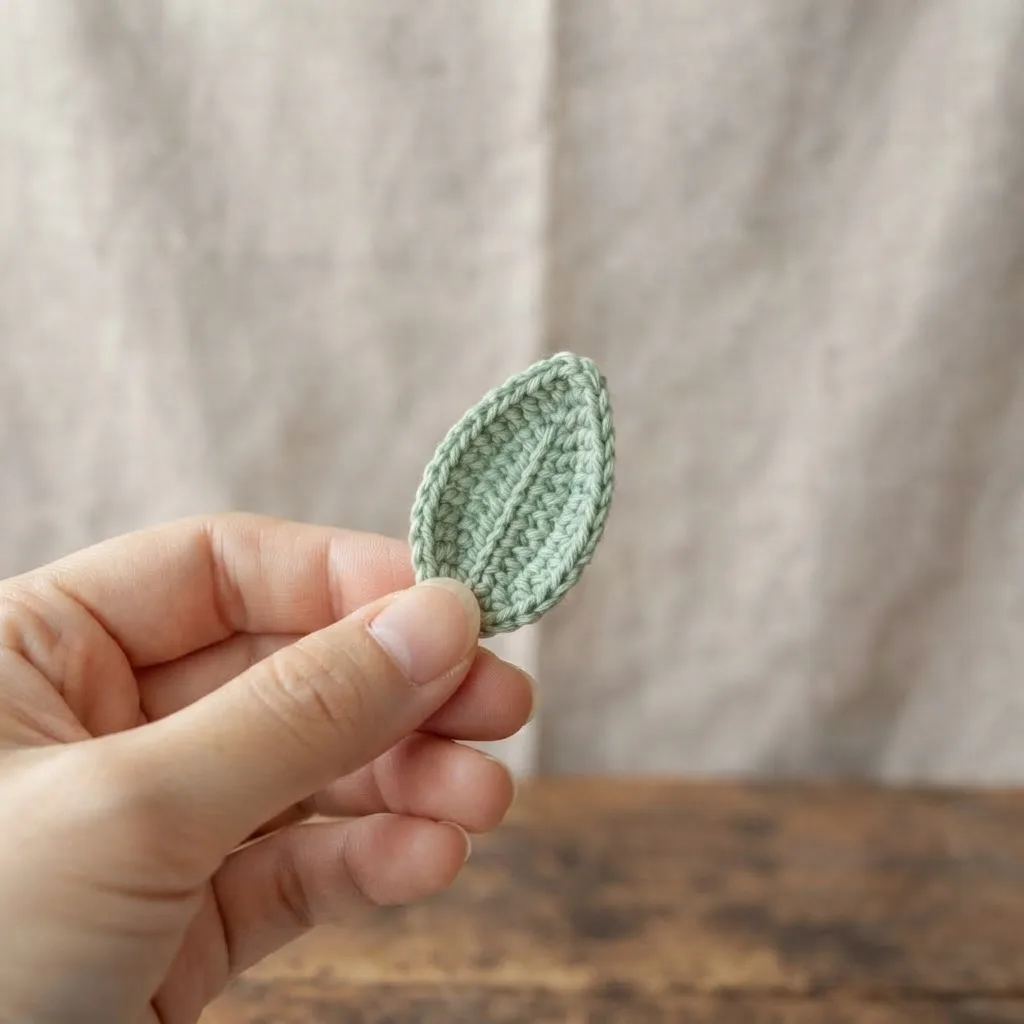
- Ch 8
- Row 1: sl st in 2nd ch from hook, sc 1, hdc 1, dc 2, hdc 1, sc 1, 3 sc in last ch (this is the tip of the leaf), then continue back down the other side of the chain, sc 1, hdc 1, dc 2, hdc 1, sc 1, sl st in last ch. This creates a pointed leaf shape with a visible center vein running down the middle from the working chain.
- FO, leaving a long tail for attaching to the stem.
Piece 4: Stem (make 1)
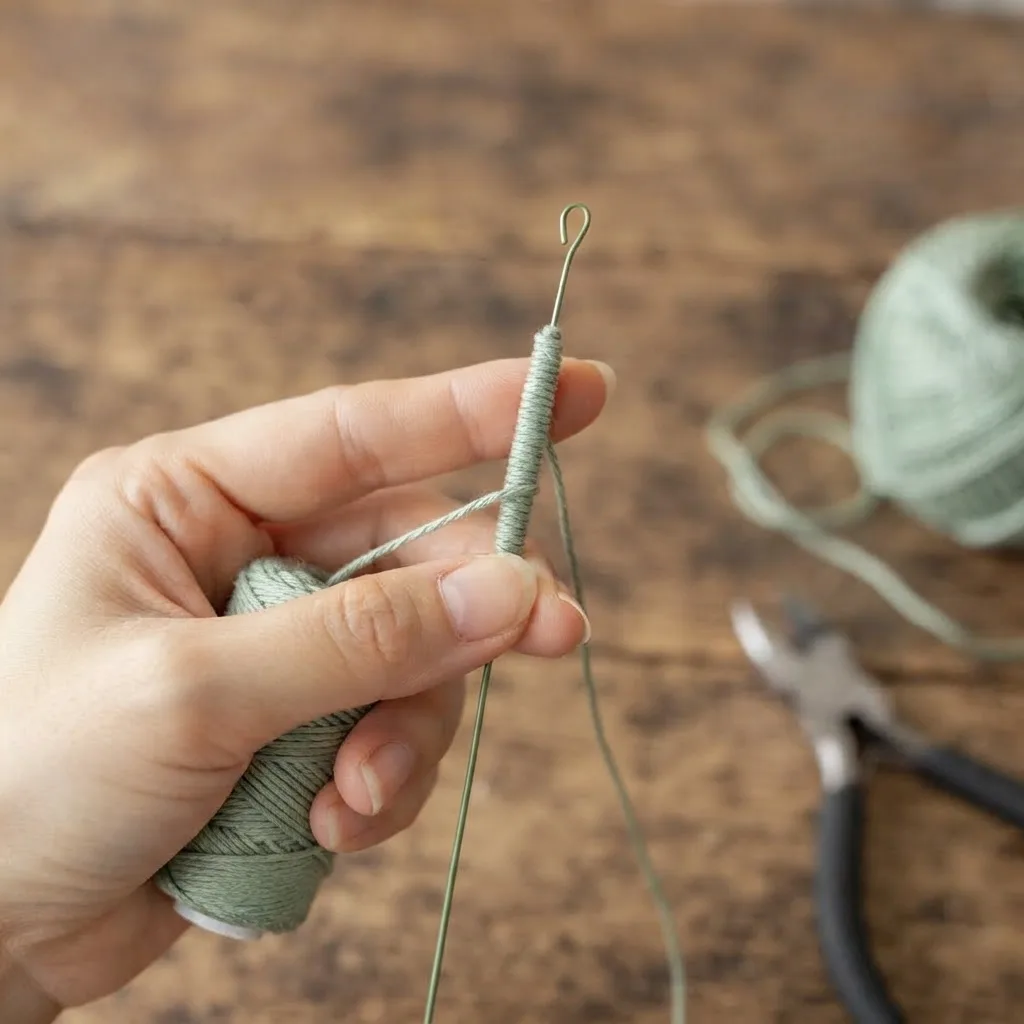
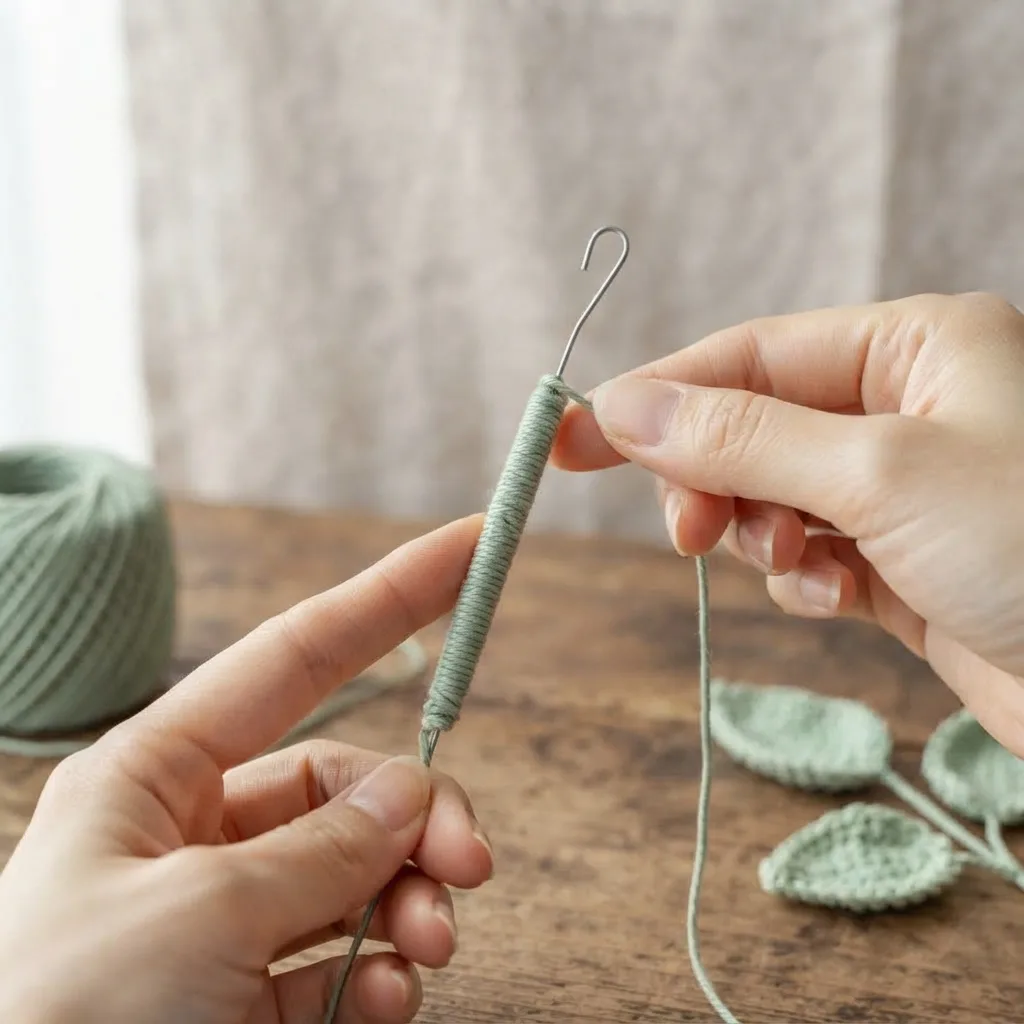
Take the length of floral or stem wire and, leaving a few inches bare at the top to insert into the base of the rose, wrap green yarn tightly and evenly down the entire length of the wire, or use floral tape instead, securing the end with a small dot of glue or a few tight wraps. Bend the bare top of the wire into a small hook or loop shape, so it can be inserted securely into the base of the rolled rose without slipping back out.
Assembly
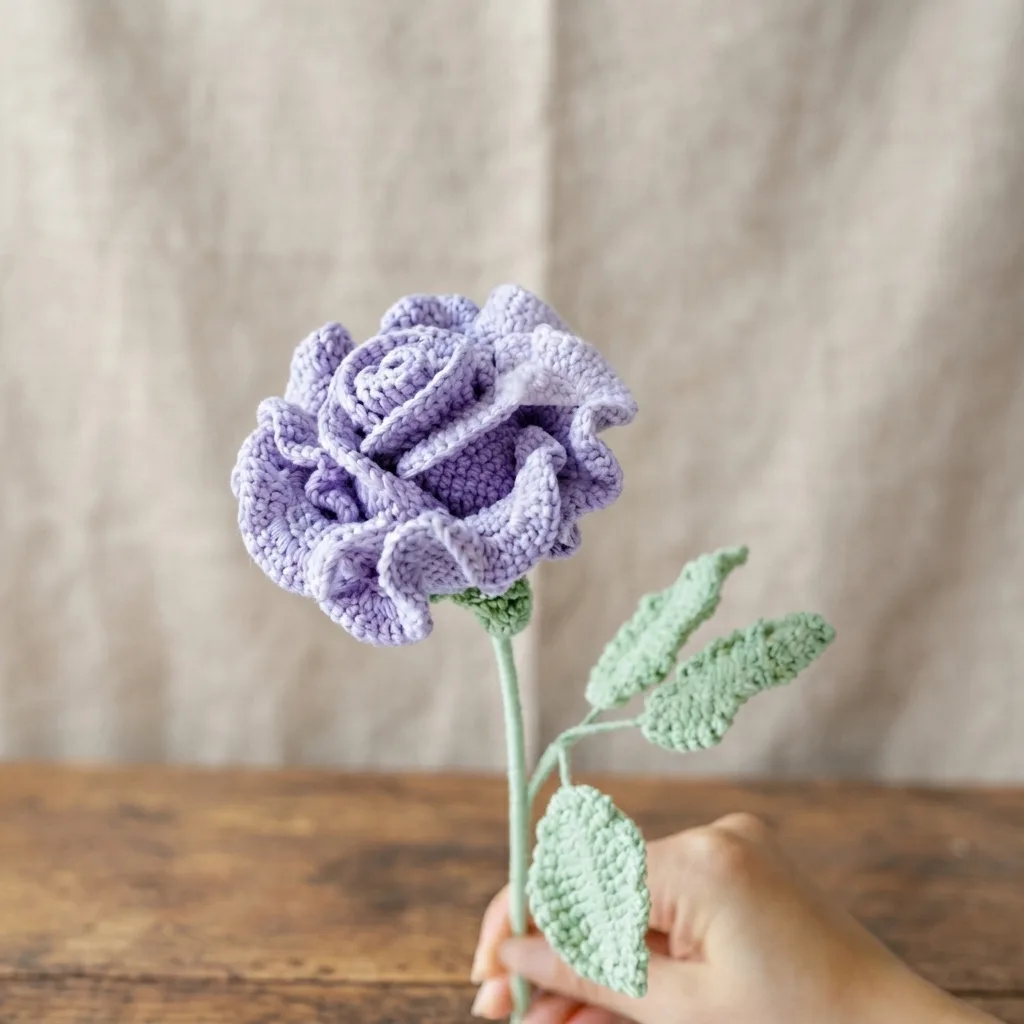
- Insert the hooked or looped top of the wrapped stem up into the base of the rolled rose, threading it through the center of the roll so it sits firmly and does not wobble.
- Slide the sepal piece up the stem to sit directly beneath the rose base, then sew or glue it in place to hide the join.
- Attach 2 to 3 leaves along the stem at varying heights, sewing the base of each leaf securely against the yarn wrapped wire.
- Gently fan out and shape the rose petals with your fingers, curling the scalloped edges outward for a natural, blooming look.
- Curve the stem slightly if you like, for a more organic, lifelike stance.
Tips for This Pattern
- If your petal strip is curling too tightly on its own before you even start rolling it, try going up half a hook size, a looser strip is much easier to shape by hand.
- When rolling the bud at the center, keep it snug but not overly tight, a bud that is too compact can make the finished rose look smaller and less open than the reference photo.
- A tiny dab of fabric glue at the base of the roll, hidden under the sepals, can give extra peace of mind that the layers will not loosen over time.
Loved this pattern? Browse more [Flowers] patterns on Learn Crochet Daily, and tag us if you make your own rose, we would love to see it.